As the G7 enters a new cycle under the 2026 French Presidency, international cooperation on ocean observations and prediction systems remains essential to addressing critical Ocean issues. The G7 Future of the Sea and Ocean Initiative (FSOI) Working Group continues to provide a forum for coordinating shared priorities and activities across the G7 countries and the European Union to support a sustained global system of ocean observations, data, and information. For 2026, the French Presidency has identified OneArgo, GOOS resilience, Artificial Intelligence, and Digital Twin Ocean as high priority topics. Other priority topics for 2026 include:
- Augmented Observing and Forecasting for Marine Life
- Arctic Ocean Observing
- Global Ocean Monitoring Indicators
- Governance, Coordination, and Sustained Funding for the Observing System
- Ocean Carbon
- Marine Research Infrastructure Integration and Harmonization
- Support for the World Ocean Assessment
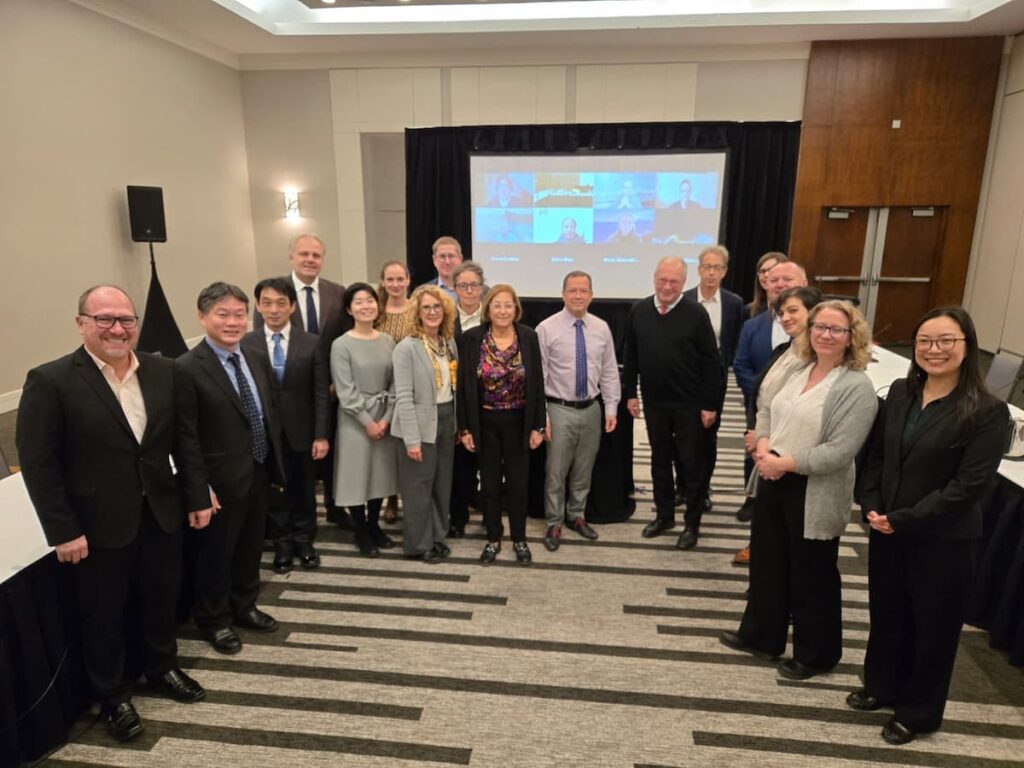
These priority topics were agreed upon at the G7 FSOI Working Group meeting from 19-20 November 2025 in Ottawa, Canada, under the Canadian G7 Presidency. Since 2016, the G7 FSOI Working Group has brought together government representatives and scientists from the G7 countries and the European Union to address key Ocean issues. Its work focuses on ocean observations, digital infrastructure and prediction systems, information to support decision making, regional observing capacity, and political cooperation.
On the first day of the meeting, members shared national updates on Ocean-related scientific initiatives and policies. Discussions then focused on coordinated actions to observe the Arctic Ocean, support the OneArgo array, coordinate ocean carbon observations, and advance the observation and forecasting of marine life. The Canadian Presidency also convened a special session on the use of artificial intelligence (AI) for understanding and predicting the ocean, for which they held a workshop of technical experts to discuss the responsible and effective integration of AI in ocean science.
On the second day, members received updates from key FSOI partners, including the Ocean20 Engagement Group under the G20 South Africa Presidency, Global Ocean Observing System (GOOS), the World Ocean Assessment, and the Deep Sea Observing Strategy (DOOS). Members also provided updates on priority topics such as for the governance, coordination, and sustained funding for the observing system; digital twins of the ocean; marine research infrastructures integration and harmonization, and global ocean monitoring indicators.
The meeting concluded with the handover of G7 FSOI co-chair responsibilities to France and the United States.
G7 FSOI activities are supported by the Coordination Centre, which is funded by the European Union under the EU4OceanObs project.
Additional information:
- G7 FSOI Activities: https://www.g7fsoi.org/activities/
- France’s 2026 G7 Presidency: https://www.elysee.fr/g7evian
- Canada’s 2025 G7 Presidency: Canada’s 2025 G7 Presidency